
Technology
Small device.
Massive impact.
Pocket-sized and one-button simple on the outside. Inside: infrared optics, a dedicated processor, and an algorithm built for one job — an objective answer, every time.
Engineered for the field
Built for real world conditions.
Infrared imaging
A near-infrared camera captures the pupil clearly in any ambient light — bright roadside, darkened room, or helicopter cabin.
PLR-3 algorithm
LIOR's pupil light reflex algorithm analyzes constriction speed, amplitude, and latency to produce an objective reactivity score.
Guided alignment
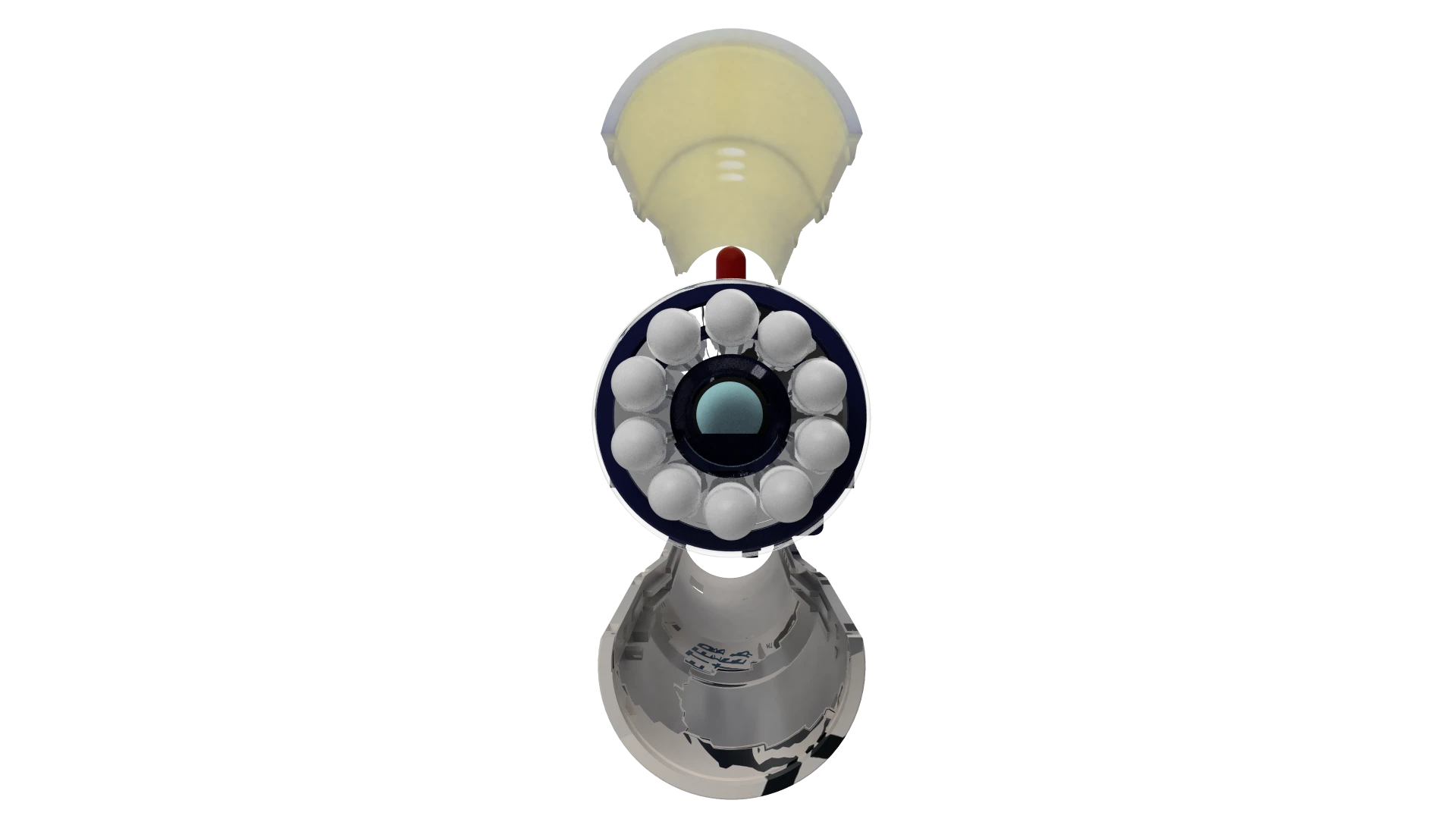
Sights and a red focus ring around the lens make correct positioning intuitive, improving accuracy and reducing rejected readings.
Distance-independent scaling
PCT-filed, patent pending. Pupil size is measured accurately without fixed distance or positioning hardware.
Private by design
All processing happens on the device. Results are not stored beyond the reading — patient privacy is protected by architecture.
Flashlight mode
A toggle switch converts LIOR into a standard examination light, so one device covers the whole assessment workflow.
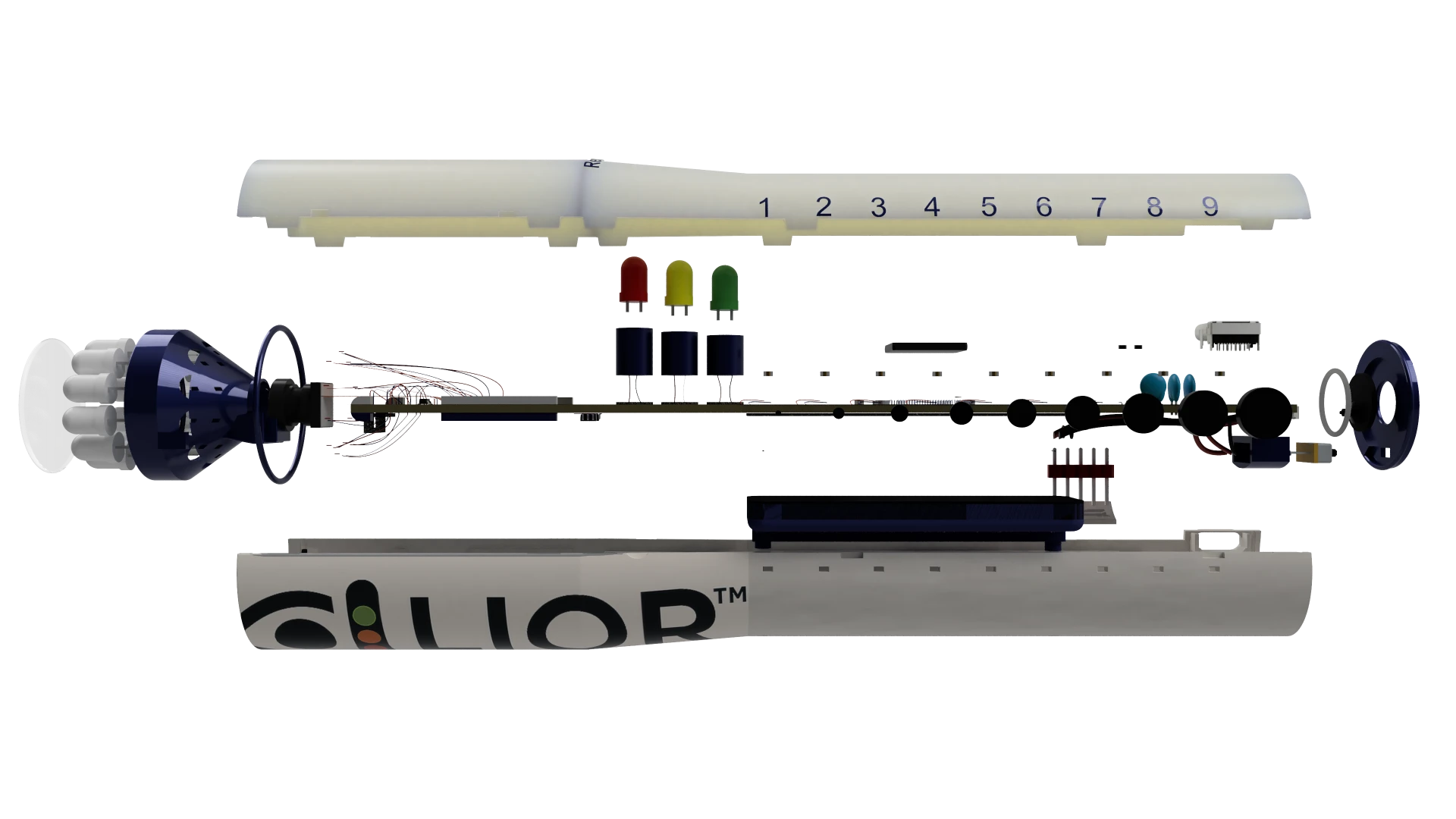
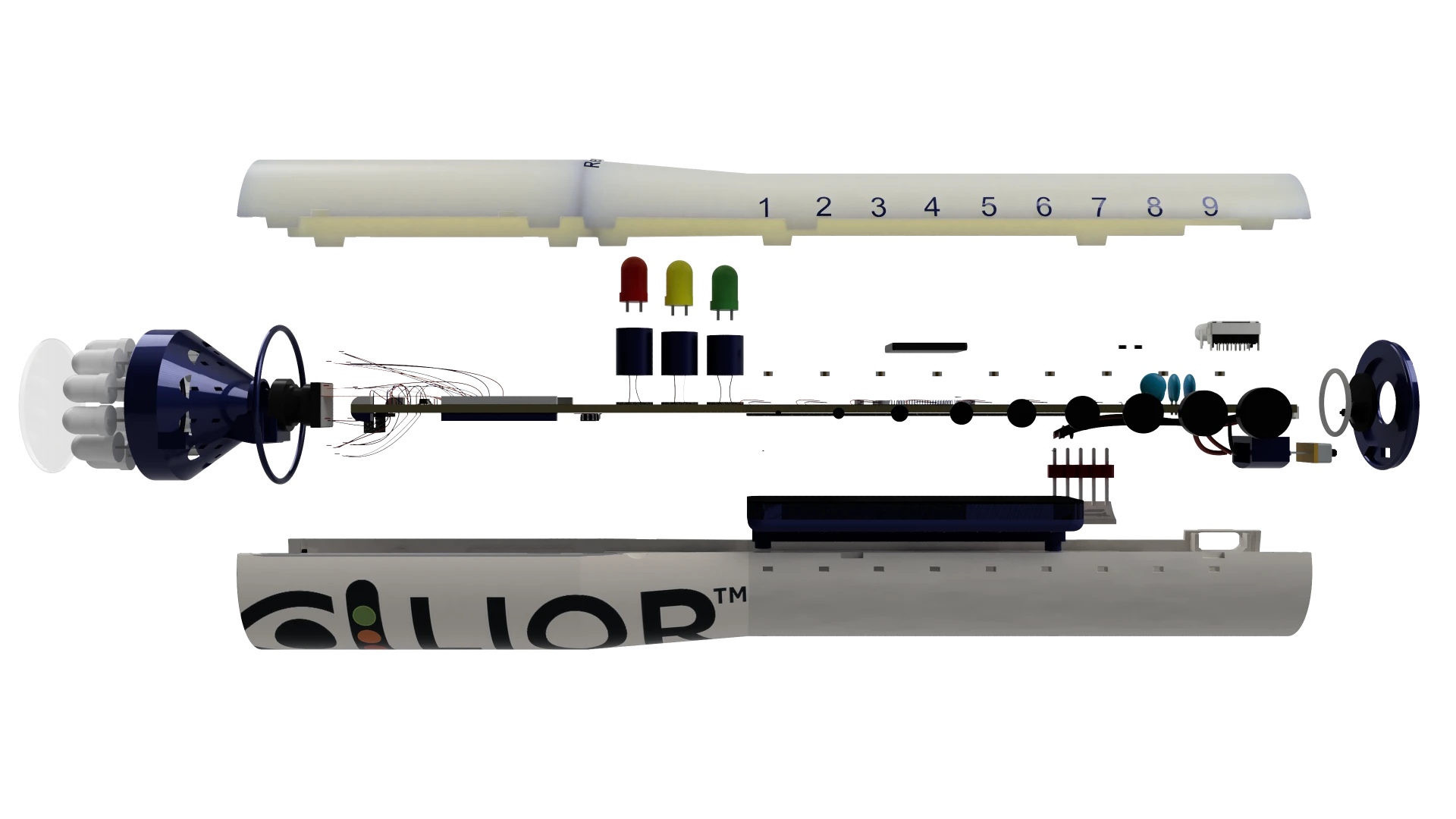
Inside LIOR
Purpose built. Field ready.
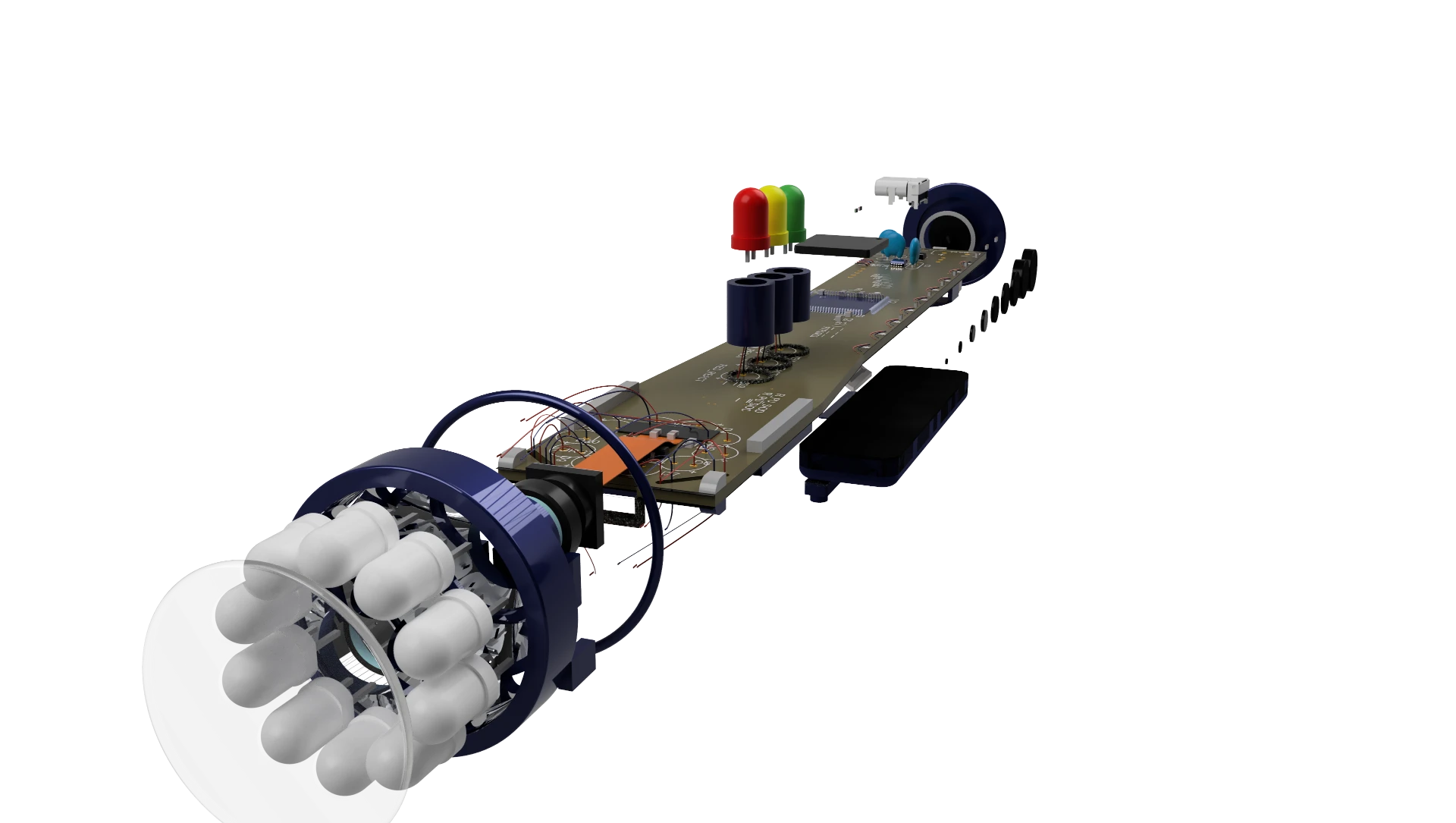
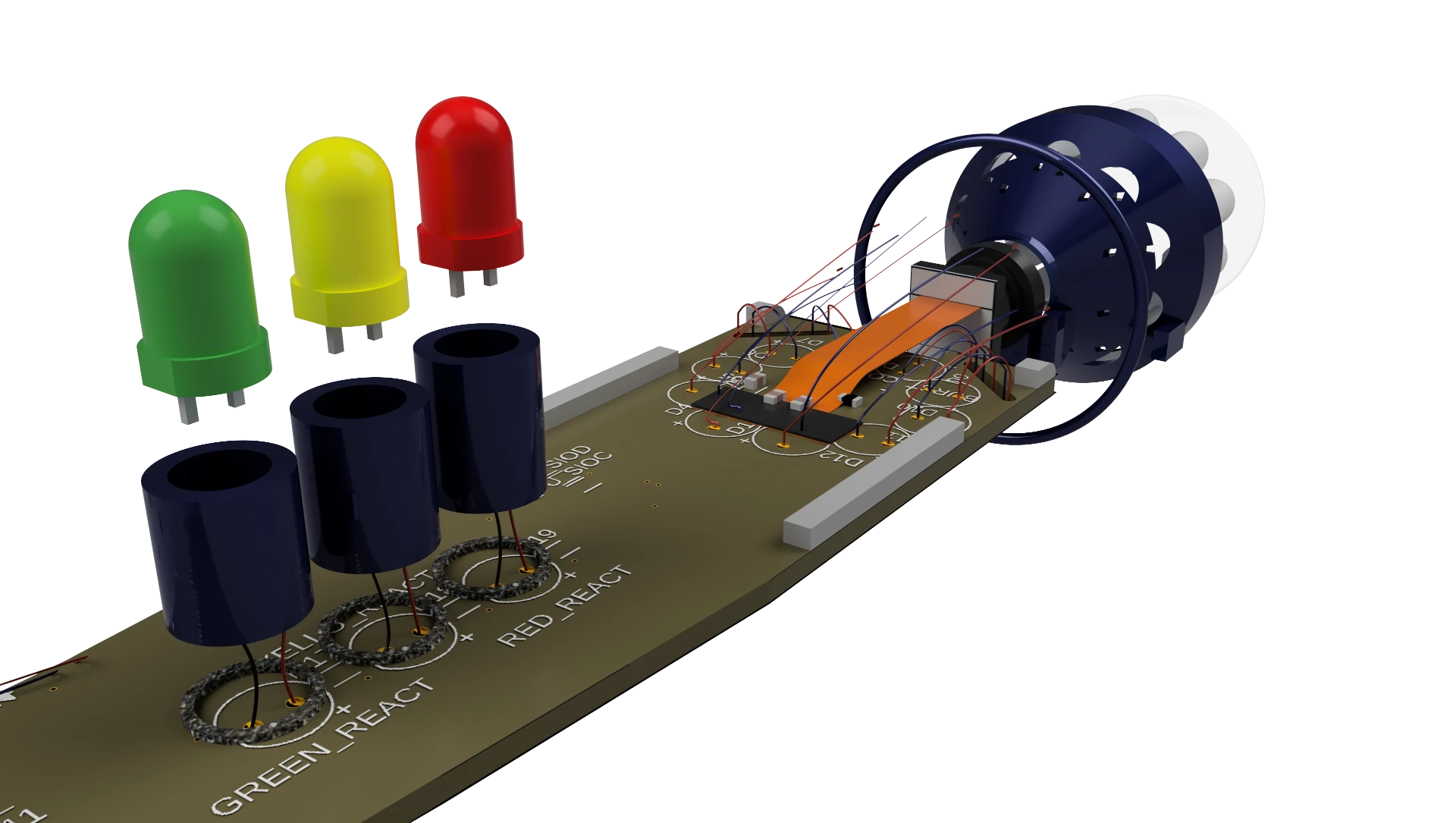
Every component serves the same goal: a fast, objective, field-ready pupil assessment. Infrared camera, LED array, custom PCB, and rechargeable battery fit into a pocket-sized enclosure — no smartphone, no cloud dependency, no consumables.
- Dedicated IR camera and MCU for on-device processing
- Rechargeable battery with up to an estimated 8 days of typical use
- Integrated flashlight mode for the full clinical workflow
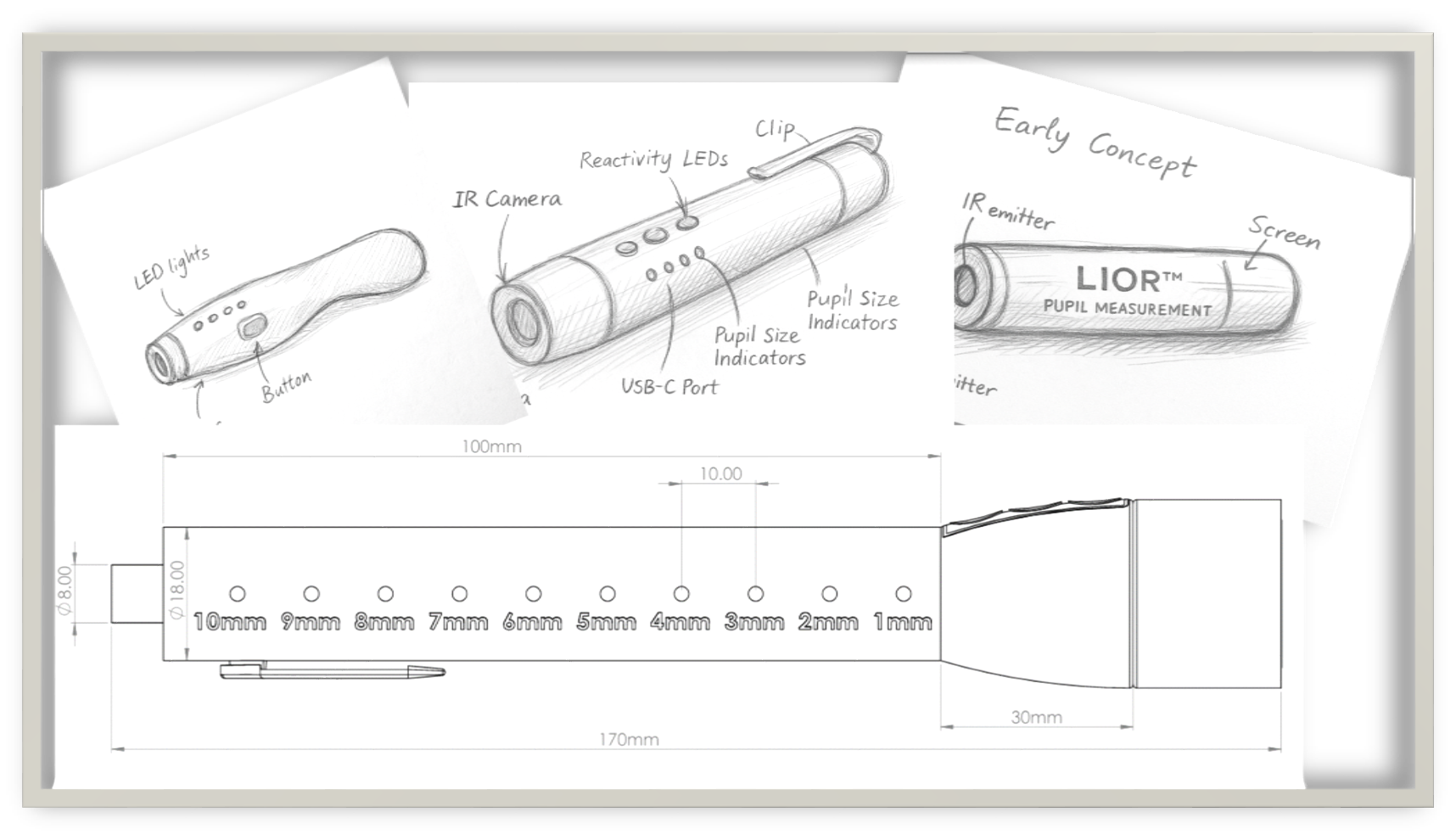
Design evolution
From first sketch to field-ready.
LIOR began as a simple idea: bring the objectivity of a hospital pupilometer into a penlight-sized tool that works in the back of an ambulance. Every iteration since has been driven by the same constraint — it has to be simple enough to use with gloves on, in the dark, under pressure.
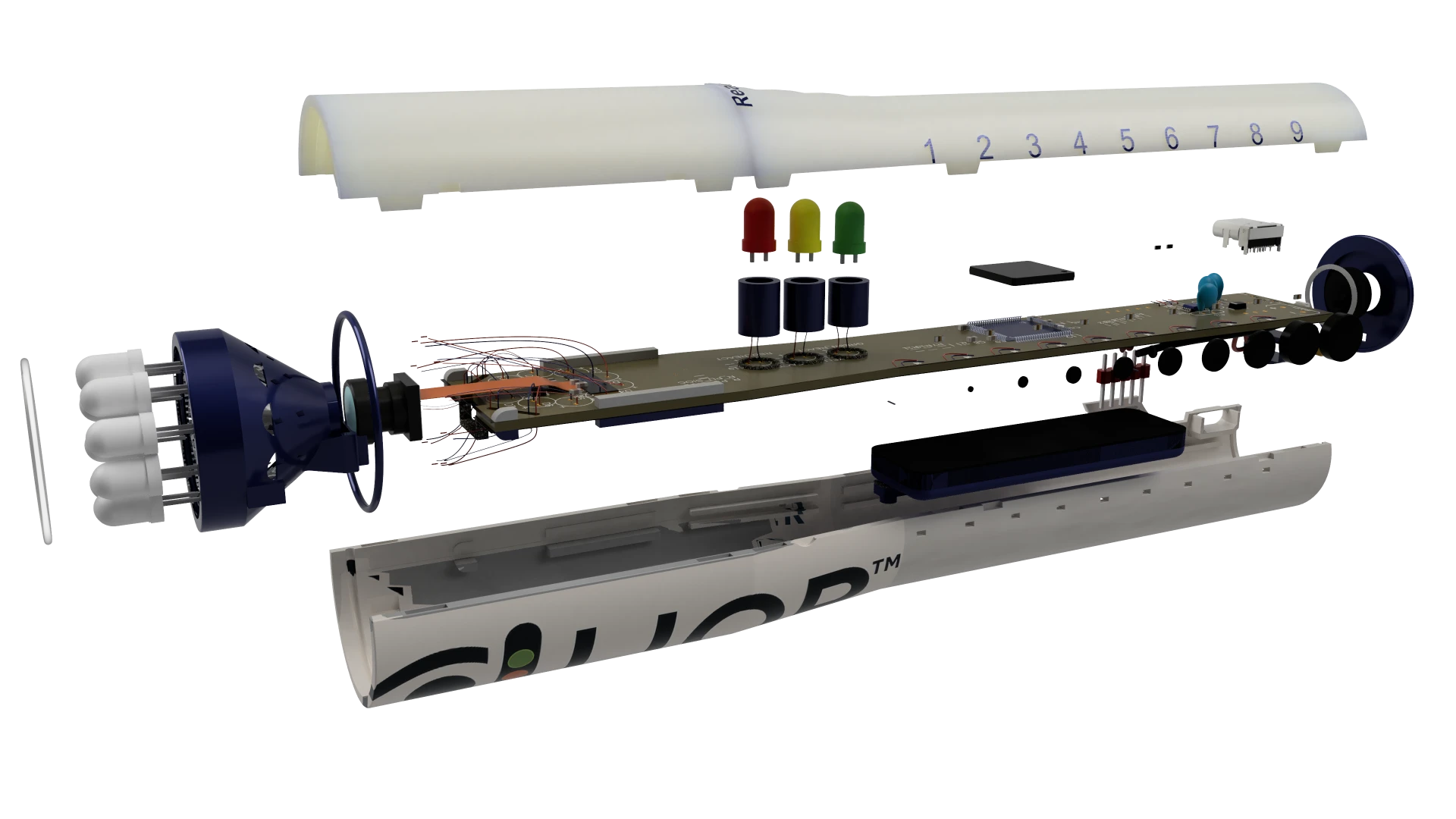
Under the shell
Every component, engineered for one job.
See what objective assessment looks like.
We'll walk your team through the device, the evidence, and an evaluation plan.
Patent pending (PCT filed).